projectsgrantsbirds of plymouth beach
articles & resourcesabout uscontact us
orvs
photo by Rachel Lee Nichols
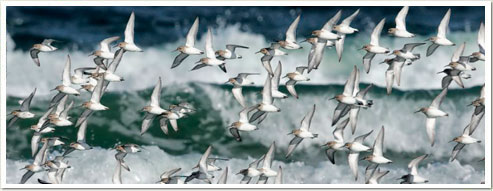
In Massachusetts and other states in New England, governmental agencies sell permits for people to drive and park Off-Road Vehicles (ORVs) on some beaches.  Vehicles moving or parking near nesting areas can displace shorebirds, interfere with their breeding by making habitat unusable, and block access to food.  High densities of ORVs, with their passengers and dogs, are a major source of disturbance to coastal shorebirds.  Such disturbance decreases nesting productivity and prevents birds from gaining the weight needed to make long distance migrations.  Vehicles also leave toxic chemicals on the fragile ecosystem, and cause beach erosion.
 
CLICK TO SEE "TAKING FLIGHT: PLANTATION PHOTO EXHIBIT CHRONICLES BEACH BIRDS", AN ARTICLE IN THE OLD COLONY MEMORIAL
 
pdf A REPORT OF ROSEATE AND COMMON TERN STAGING ON PLYMOUTH BEACH IN 2007 BY BECKY HARRIS, PH.D.
CLICK TO READ "MIGRATION, INTERRUPTED: NATURE'S RHYTHMS AT RISK ", A NEW YORK TIMES ARTICLE ABOUT PRINCETON BIOLOGIST'S NEW BOOK, "NO WAY HOME" WHICH WARNS OF DISAPPEARING MIGRATION AROUND THE WORLD.
pdf
CLICK TO SEE AN EDITORIAL IN THE OLD COLONY MEMORIAL ON ORV USE OF PLYMOUTH BEACH
 
CLICK TO READ "IN AID OF A BIRD, SOME INCONVENCIENCES FOR PEOPLE', A NEW YORK TIMES ARTICLE ABOUT POPULATION GROWTH OF THE ATLANTIC PIPING PLOVER AND RESTRICTIONS ON THE ORV DRIVING ON MASSACHUSETTS BEACHES.

Other organizations working on conservation of coastal habitat and protection of shorebirds locally, nationally and internationally include:

Western Hemisphere Shorebird Reserve Network (WHSRN)
www.whsrn.org/index.html

The Western Hemisphere Shorebird Reserve Network ,WHSRN, was launched in 1985 to conserve shorebirds and their habitats through a network of key sites across the Americas.

BACK TO TOP

Coastal Bird Conservation Program (CBCP)
www.audubon.org/bird/cbcp

The Coastal Bird Conservation Program aims to halt and reverse declines of North American “at-risk” waterbirds. The CBCP works with national, state, and local partners to assess sites of global, national, and regional importance to coastal birds in the western hemisphere, and increase site protection.

BACK TO TOP

Important Bird Area (IBA)
www.massaudubon.org/Birds_&_Beyond/IBAs/index.php

The IBA identifies key sites in Massachusetts that provide essential habitat to one or more species of breeding, wintering, and/or migrating birds. Plymouth and Duxbury Bays are an Important Bird Area.

BACK TO TOP

ShoreBird World
www.shorebirdworld.org

Shorebird World promotes understanding of the natural history of shorebirds, conservation challenges they face throughout their migratory ranges, and international research and conservation efforts to help ensure their survival.

BACK TO TOP

Manomet Center for Conservation Sciences
www.manomet.org

Manomet’s mission is to conserve natural resources for the benefit of wildlife and human populations. Through research and collaboration, Manomet builds science-based, cooperative solutions to environmental problems.

BACK TO TOP

Mass Wildlife: Massachusetts Division of Fisheries & Wildlife, Natural Heritage & Endangered Species
http://mass.gov/dfwele/dfw/nhesp/conservation/birds/coastal_waterbirds.htm

MassWildlife coordinates statewide conservation efforts and monitoring programs, compiles and disseminate census data, restores and protects important coastal nesting sites, provides technical assistance to landowners and other cooperators, and uses regulatory tools to protect breeding populations of state-protected rare species and their habitats.

BACK TO TOP

U.S. Fish & Wildlife
www.fws.gov/northeast/pipingplover/recplan/appendixg.html

The U.S. Fish and Wildlife Service is the principal Federal agency charged with protecting and enhancing the populations and habitat of more than 800 species of birds, including the endangered piping plover.  The agency developed guidelines to prevent the mortality or harassment of piping plovers, their eggs, and chicks on recreational beaches, and beaches where vehicles are permitted.

BACK TO TOP

Coastal Waterbird Program
www.massaudubon.org/cwp/index.php

The CWP’s primary focus is monitoring and protecting the most threatened species of nesting birds on the Massachusetts coastline. The program advocates for protecting the entire ecosystem, including coastal beaches, salt marshes, and tidelands, which serve as habitats to 49 species of breeding birds and 112 species of migratory or wintering birds.

BACK TO TOP

projectsgrantsbirds of plymouth beacharticles & resourcesabout uscontact us
SITE MAP : COPYRIGHT ©2007 GOLDENROD FOUNDATION : PHOTOGRAPHY ©2007 JIM FENTON